Posted on

Winnipeg Soccer, as outdoor ends, indoor begins and the knee injuries need Physiotherapy

It’s almost the end of September in Winnipeg, and its all too common on the soccer field and basketball court.  An athlete jumps to get the ball, lands and blows out a knee. And most of that time those athletes are girls. Girls are four to six times more likely to suffer a certain kind of knee injury than boys, according to Mayo Clinic research.

Your Physio Winnipeg always concentrates on proper training, biomechanics and technique of exercise, otherwise, why do it if you’re going to hurt yourself.

When an athlete cuts, pivots or jumps, the athlete puts stress on the ligaments of the knee; Medial, Lateral and especially the Anterior Cruciate Ligament or ACL in the knee.  If the knee collapses inward during these moves, that ligament can tear, along with severe injury to the surrounding soft tissue.

ACL injuries are especially a problem for girls, possibly because of the angles of their leg bones or imbalanced muscles around the knee. But proper biomechanics, education and training can help prevent ligament injuries.

Train to jump properly, and actually practice to inherit a good habit; “Legs shoulder width apart. you have to jump as high as you can and when you land you have to land straight and your knees can’t go in or out,” explains Winnipeg physiotherapist, Chris Bisignano.

At the heart of research now is jump mechanics and landing mechanics.  These drills teach how to move more safely and will strengthen the muscles around the knees.

Ligament injuries can mean a trip to the operating room and reconstructions are not minor.  Recovery can keep you out of the game for nine months to a year.  But injury prevention training, and cross activity training can keep kids in the game. Westwood High School in Winnipeg, actually has a “high performance training or phys ed” class for its athletes. “They give their kids some training techniques I would never try in practice,” says Bisignano, “but its excellent training to be involved in to prevent injury”.
Posted on

your Ergonomics, line of sight and that nagging neck-shoulder-upper back pain, by Physiotherapy Winnipeg

Whether it be at work, rest or play; a candy bar cannot make that pain go away…but your ergonomics at the workstation, at home or doing any activity can make a significant difference to your health.

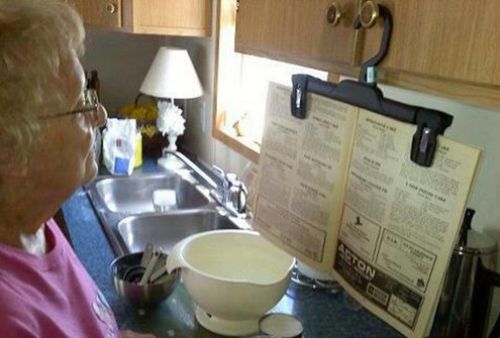
We can often find those simple modifications, those easy answers to perform a task easier, and safer. The problem is that many of us do not take the time to change our habits, make changes and implement them consistently at our busiest work areas…the kitchen, in this case. The ‘pant hangar’ keeps the recipe near eye level, there is no awkward posture to maintain and the cabinet can even be accessed quite easily, well done!


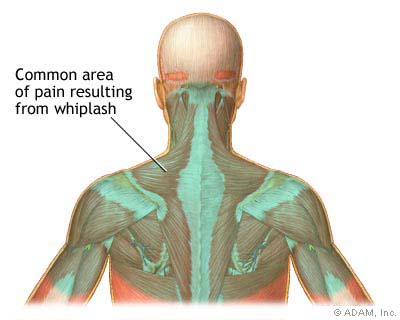
This concept always applies to those that must ‘sit for a living’, the ‘desk jockeys’ of the finance, legal, grain and media industries here in Downtown Winnipeg. Like a ‘whiplash’, those muscle aches can proliferate throughout the upper back and neck.


Such that, you must remember to adjust your computer monitor height; use some yellow pages or photocopy paper bundles. Some recent ergonomic assessments have resulted in 8-10 inches of monitor height changes to accommodate the individual’s line of sight. Your eye level should be equal to that of the curser start position, in the most frequently used software program. This position allows the eye to adjust to a variability of 2-3 inches of text/toolbar and decreases or eliminates the chronic forward head posture.

Let your human resource department or health & safety manager know that I am available for any size group education, assessments and ergonomic design.

Posted on 1 Comment

your Shoes could be the source of your Pain…your gait and Physiotherapy Winnipeg

For almost 20 years, I have been the bearer of bad news for Winnipeg women in Downtown Winnipeg. Those with plantar fascitis, knee pain, iliotibial band syndrome, hip pain, back pain, etc…those shoes may be the ultimate source of the problem.

I used to say, “wouldn’t you rather be wearing a Bisignano?”. I guess I have had this dream of designing my own ergonomic, yet fashionable shoe line. For many of us, our shoes dictate our gait; how we walk, step, stand and adjust to the terrain. And womens’ shoes are notorious for poor design, forcing womens’ feet into contortionist postures. That can’t be good?

I know you may be thinking, “but I don’t wear high heels all the time!”…the opposite style can do just as much if not more damage…the ‘flip-flop’. Shoes with little or variable support; flip-flops, simple sandals, loose, flat shoes like ‘crocs’, do nothing for your feet. Even the flat snow boots of winter can be a biomechanical disaster. Grab some over-the-counter insoles and make them 1000% better.

Find a retailer that knows how to fit your feet, knows some basic biomechanics and will not push those $300+ Nikes on your feet. yourPhysio can identify your biomechanical fault (we all have them) and recommend the exercises and support mechanism (shoes) best for you.

Posted on

Sitting a ‘disease in Winnipeg? Just a necessary evil of our computer driven ergonomics Downtown

Really…too many media driven articles on sitting as a “disease”…since 1995 or there about’s, it’s been a necessary evil of our increasingly computer driven ergonomics at work, rest and play; the desktop, the laptop, the smartphone, the tablet, next?

But then why are exercise plans so quick to add the situp? or bench press? or knee extension? All of these place our biomechanics, our posture into greater flexion! Beware, add more extension exercises now! add those planks!

Give yourself more reasons to stand…even every 12 minutes is ideal. If you cannot figure it out, give me a call…your ergonomics may be your disease…and you are not retiring anytime soon.

Posted on

Sitting in Winnipeg; an Ergonomic approach to your Physiotherapy needs

Many people ask; ‘what do you treat most often Downtown?’, to that I reply; “mostly neck and back injuries, just from sitting all day at a workstation”.

Here’s where my over 30,000 hours of experience as a physiotherapist, who provides specific assessment, feedback, education and instruction in Occupational Ergonomics, or how we interact with our ‘work tasks’, benefits my patients of the grain, finance and legal hub of Winnipeg.

As a physiotherapist, I must assess your workstation and task challenges in order to understand your biomechanics that caused an injury or pain. I only use evidence based guidelines published, and reviewed annually (CSA link http://t.co/Su0MxsFy). Beware of those ‘weekend course’ assessors, quite frankly you will get what you pay for.

You, and your company can reduce repetitive strain complaints in your workplace with an ergonomic assessment at your specific, work site. I will assess problem areas and make recommendations for change to workstations, task organization and management, and your specific, body mechanics with a focus on employee participation, responsibility and behaviour change.

A worksite visit to understand your business and jobs will only provide a baseline for understanding the demands on workers. It will provide us with an ability to recommend modifications for ergonomic improvements and safe body mechanics training.

By providing immediate feedback; employees are able to participate and install immediate, habitual changes at work, home and play, that assist in improving compliance with safe work procedures, and biomechanics that prevent injury.

The main risk factors for musculoskeletal injury can be categorized under one of the following four broad headings: force, posture, repetition and duration of task. In the office or call center, even the hair stylist, dental hygienist and GAMERS! environment these risk factors could be interpreted as;

  • force – is an exertion performed to overcome the weight, resistance, or inertia of the body or a work object (i.e. forceful hand movements while keying or mousing),
  • posture – awkward postures deviate from neutral or comfortable positions. (i.e. twisted neck, raised shoulder, extended wrist, etc..),
  • repetition – refers to tasks or series of motions that are performed over and again by the same muscle groups with little variation (i.e. continuous mousing or keying)
  • duration – the time which something continues (i.e. sustained neck extension to view monitor or abducted shoulder while mousing)

check back again for more on this continuing series regarding your ‘sitting in Winnipeg’…